


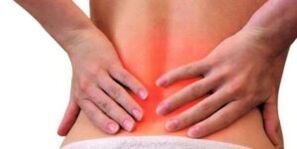
Lower back pain, whether constant or recurring, can not only cause discomfort, but also make a person's life truly unbearable.People suffering from severe back pain are not only deprived of the opportunity to engage in sports, for example, or physical work - they often find it difficult to even simply walk, stand or sit, which means that the most common daily activities become a real test for them.Therefore, if a person has back pain in the lumbar region, it is extremely important to understand the causes of this disease in time and start the appropriate treatment to avoid much more serious health problems.
The main causes of pain
Discomfort and unpleasant sensations in the lower back that occur from time to time are often associated not with specific diseases, but with the influence of negative factors on the human body.We are talking about:
- sedentary work, for example, long periods of time behind the wheel or in an office in front of a computer;
- excessive physical activity;
- prolonged stress;
- intensive training in the gym that does not correspond to a person's abilities;
- poor diet leading to lack of vitamins and microelements;
- poor quality mattress and so on.
In children, back discomfort is most often associated with incorrect posture, an incorrectly chosen study chair and desk, as well as a backpack and shoes.Excess weight can provoke pain even in people of any age, especially if the extra pounds have appeared in a short period of time.

The main thing is that by eliminating the influence of the above factors, you can quickly get rid of back problems and return to your usual lifestyle.
However, if your lower back bothers you regularly, and even more so if the intensity of the sensations increases each time, there is a high probability that they are caused by much more serious reasons.All diseases that can cause back pain can be divided into 2 groups: the first includes problems with the musculoskeletal system and the second includes various pathologies of internal organs.
Back pain as the main symptom is manifested when:
- lumbar osteochondrosis;
- osteoporosis;
- intervertebral disc protrusion;
- intervertebral hernia;
- spondylosis;
- curvature of the spine (scoliosis, lordosis, kyphosis);
- arthritis;
- spinal tuberculosis;
- myositis;
- intercostal neuralgia;
- sciatica.
Congenital abnormalities of the spine structure, as well as previous injuries, also belong to this group.
If the pain in the lumbar region is of a reflected nature, that is, accompanied by disturbances in the functioning of nearby internal organs, the patient may be diagnosed with:
- urolithiasis;
- pancreatitis;
- cholecystitis;
- hemorrhoids;
- chlamydia;
- colitis;
- liver diseases;
- kidney pathologies;
- benign or cancerous neoplasms of the gastrointestinal tract.
Unpleasant sensations in the lumbar region can also be a residual phenomenon after a severe cold, flu or sore throat, as well as a consequence of frequent and prolonged constipation.

In women, the lower back often hurts for completely natural reasons related to the processes occurring in their body.We are talking about discomfort and annoying pain during PMS and during menstruation, menopause or pregnancy itself.In the latter case, discomfort in the back often follows the expectant mother throughout the 9 months, intensifying as the fetus grows and the load on the spine increases.
Pathological causes in women are more often associated with infectious processes in the vagina (candidiasis, bacterial vaginosis), inflammation of the appendages or inner lining of the uterus (endometriosis), the formation of polyps or ovarian tumors, as well as the contraction of the uterus after an abortion.In addition, in pregnant women, severe pain in the lower back can indicate a threat of premature birth or miscarriage.
Pain and its causes in men, in addition to all the above diseases, can be associated with inflammation of the epididymis or prostate gland.For example, with epididymitis, discomfort localized mainly in the groin area can spread to the lower back, and with prostate, in addition to discomfort in the anus, back pain on the right often radiates to the legs and buttocks.
Types of pain
Unpleasant sensations arising in the lumbar region vary in nature, intensity and duration.The pain can be sharp and sharp or annoying and aching, barely noticeable or painful, paroxysmal or constant.Only by understanding what exactly a person feels, you can understand what causes these sensations and how to eliminate their root cause.
For example, severe pain that follows a person almost 24 hours a day can indicate osteochondrosis.A patient with this disease finds it difficult not only to lift weights or walk, but also to sit, cough or sneeze.They are accompanied by severe pain and radiculitis, which affect not only the lower back, but also the hips, buttocks and legs.At the same time, discomfort and unpleasant sensations intensify, you just need to try to change the position of the body or walk.
Acute pain in the lower back in the vast majority of cases indicates muscle strain, too sudden movements, excessive physical strain, injuries, hypothermia or long stay in an uncomfortable position.In this case, the patient suffers from the so-called "lumbago", which feels like an electric shock.Painful pain is characteristic, first of all, of the inflammatory process in the muscles.Most often, they are accompanied by stiffness in movement, due to which the patient has to give up any manifestation of activity and stay in bed for several days.
Periodic pains can be caused by abnormal physical activity, uncomfortable position of the body during work or sleep, as well as by pathologies of some internal organs.They disappear completely once their source is identified and eliminated.If the cause of poor health is not discovered in time and the disease manages to gain momentum, the discomfort associated with it can become chronic.It is about inflammatory processes or degenerative changes in bone and cartilage structures, nerve fiber damage and blood circulation disorders in the leg vessels.
There is also a difference between local and general pain.With the first, the discomfort is felt in a certain place in the waist region or spreads only to nearby areas, such as the buttocks or thighs.In the second case, the pain syndrome covers the entire back, pelvic region and legs, including the feet and toes.
When you can not do without medical help?

The first thing you should do if you feel discomfort and pain in your back is simply to rest a little.It is quite possible that the reason for these sensations is the usual fatigue, stress and endless worries or a generally uncomfortable office chair at work.But if the pain does not subside or, after disappearing for a while, returns again, it simply does not make sense to postpone consulting a specialist.Moreover, if it spreads simultaneously to the lower back, hips, legs and feet or is accompanied by loss of sensation in these areas.A good reason to see a doctor is also the trauma you have suffered - not only serious car accidents, but also seemingly insignificant falls on your back during icy conditions.In any case, if severe back pain does not subside for 2-3 days in a row, delaying going to the doctor becomes dangerous for your health.
In addition, it is necessary to pay attention to other alarming symptoms that indicate secondary causes of back pain related to pathologies of internal organs:
- Rapid and unexplained weight loss, without dieting or intense exercise.In combination with frequent back pain, a sharp drop in body weight raises suspicions that the patient has a malignant tumor.
- Recent infectious diseases of the bladder and kidneys.Discomfort in the lumbar region in such patients may indicate the development of pyelonephritis.
- Increased pain after rest or in the morning.It is considered one of the signs of ankylosing spondylitis.
- Increased body temperature, fever.
- Decreased skin sensitivity, as well as problems with urination and defecation, which can be a consequence of spinal cord damage.
Consultation with a doctor for pain and discomfort in the lower back is mandatory for patients over 50 years old due to the high risk of developing osteoporosis at this age, especially in women during menopause and under 20 years old.In addition, any discomfort in the back cannot be ignored after an injury, no matter how long ago it happened, if there are serious changes in the blood analysis and if the traditional treatment used in such cases has proved ineffective.
Who can help?

There are so many reasons that can cause a person to experience discomfort and pain in the lumbar region that it can be quite difficult to understand which specialist is best to turn to for help.First of all, you should visit a therapist, but if the pain appears after a fall or blow, the patient should also consult a traumatologist.The therapist, after conducting an initial examination and collecting the anamnesis, usually refers the patient to a neurologist or rheumatologist to prescribe further analyzes and examinations necessary to establish a diagnosis.
If there are accompanying symptoms, the patient can be referred for additional consultation to specialists.For example, a man with pain that radiates not only to the lower back, but also to the hip area, should be examined by a urologist to make a final diagnosis, and a woman with a suspected vaginal infection should definitely visit a gynecologist.
Methods of diagnosis and treatment
Only a qualified specialist can determine exactly how to treat back pain, making a final diagnosis after analysis and examinations.The most common diagnostic methods used in this case are radiography, computed tomography and magnetic resonance.Using an X-ray, you can detect a violation of the structures of the spine, see signs of inflammation and compressed nerve endings.CT gives a more detailed picture, allowing you to practically look deep into the spine and study existing pathologies in detail, and with the help of MRI you can assess the condition of the spinal cord, blood vessels, muscles and identify possible intervertebral hernias.
In addition, the patient can be referred for a general blood test, which allows the level of leukocytes to identify inflammation or infection, and based on severe anemia, it can be assumed that the patient has benign or cancerous tumors.Also, for back pain, a urine test is often necessary to rule out possible kidney disease.
After receiving all the necessary results, the doctor chooses the optimal treatment option, which can be conservative or surgical.Surgical intervention is used only as a last resort, so treatment, as a rule, comes down to drug therapy, special gymnastics, massage, physiotherapy and, if desired, the use of traditional medicine prescriptions to improve the patient's condition without the risk of serious side effects.
First of all, the emphasis is on pain relief in order to alleviate the patient's condition and move on to exercise therapy and physiotherapeutic procedures.In most cases, pain in the lumbar region is effectively treated with conventional analgesics, but if necessary, patients are also prescribed narcotic drugs to cope with acute attacks.
In addition to tablets, to eliminate pain and discomfort in the back, injections and local preparations are also used - gels and ointments, which not only relieve discomfort, but also relieve inflammation, improving blood circulation in the affected area.In severe cases, the patient may be prescribed blockades - injections of sedatives that are injected directly into the deep tissues.
The next stage of treatment is the reduction of inflammation, for which non-steroidal anti-inflammatory drugs are used.If necessary, muscle relaxants are prescribed in parallel, relieving pain and muscle spasms, chondroprotectors, restoring damaged cartilage tissue and B vitamins, strengthening the body's protective functions.In addition, if the back pain is not associated with spine pathology, but is caused by infections, for example, affecting the kidneys or genitals, there is a need to take antibiotics.
Specially designed exercise sets are another mandatory component of back pain treatment.When performed regularly, you can not only eliminate discomfort and muscle tension in the back, but also slow down the inflammatory process by improving blood supply to the affected area.
A professional massage course, which is necessarily prescribed to patients after pain relief, helps to warm the muscles and relieve spasms, activate blood circulation and improve the patient's condition as a whole.In addition, physical procedures also effectively cope with pain: electrophoresis, UHF therapy, ultrasound treatment, laser therapy, mud bath, acupuncture.In parallel, you can also use remedies based on the prescriptions of traditional medicine - they serve as an excellent supplement to drug treatment, effectively relieving pain, muscle tension and swelling without the risk of negative consequences.
Prevention of back pain also plays an important role, allowing you to avoid many health problems.Regular physical exercise, even in the form of regular morning exercises that tone and strengthen muscles, following a drinking regime, a balanced diet that provides the body with all the necessary vitamins, minerals and trace elements and, of course, regular examinations by specialists that will help identify and eliminate potential problems without waiting until they begin to pose a serious threat to a person, can protect the lower back from unpleasant discomfort.